
How Much Does It Cost to Charge an EV at Home?
One of the most common questions from prospective EV buyers is: "How much will my electricity bill increase if I charge my car at home?" This guide breaks down the key factors, provides a straightforward calculation formula, and compares the real costs of EV charging versus conventional fuel — using MG electric vehicle models as examples.
3 Key Factors That Determine Your EV Charging Cost
Understanding these three elements will help you estimate your monthly electricity expenses accurately before making the switch to electric.
1. Battery Capacity (kWh)
Think of battery capacity in kilowatt-hours (kWh) the same way you think of a fuel tank's size — the larger the tank, the more it costs to fill. Here are the battery capacities of current MG electric models:
MG Model | Battery Capacity |
MG ZS EV | 50.3 kWh |
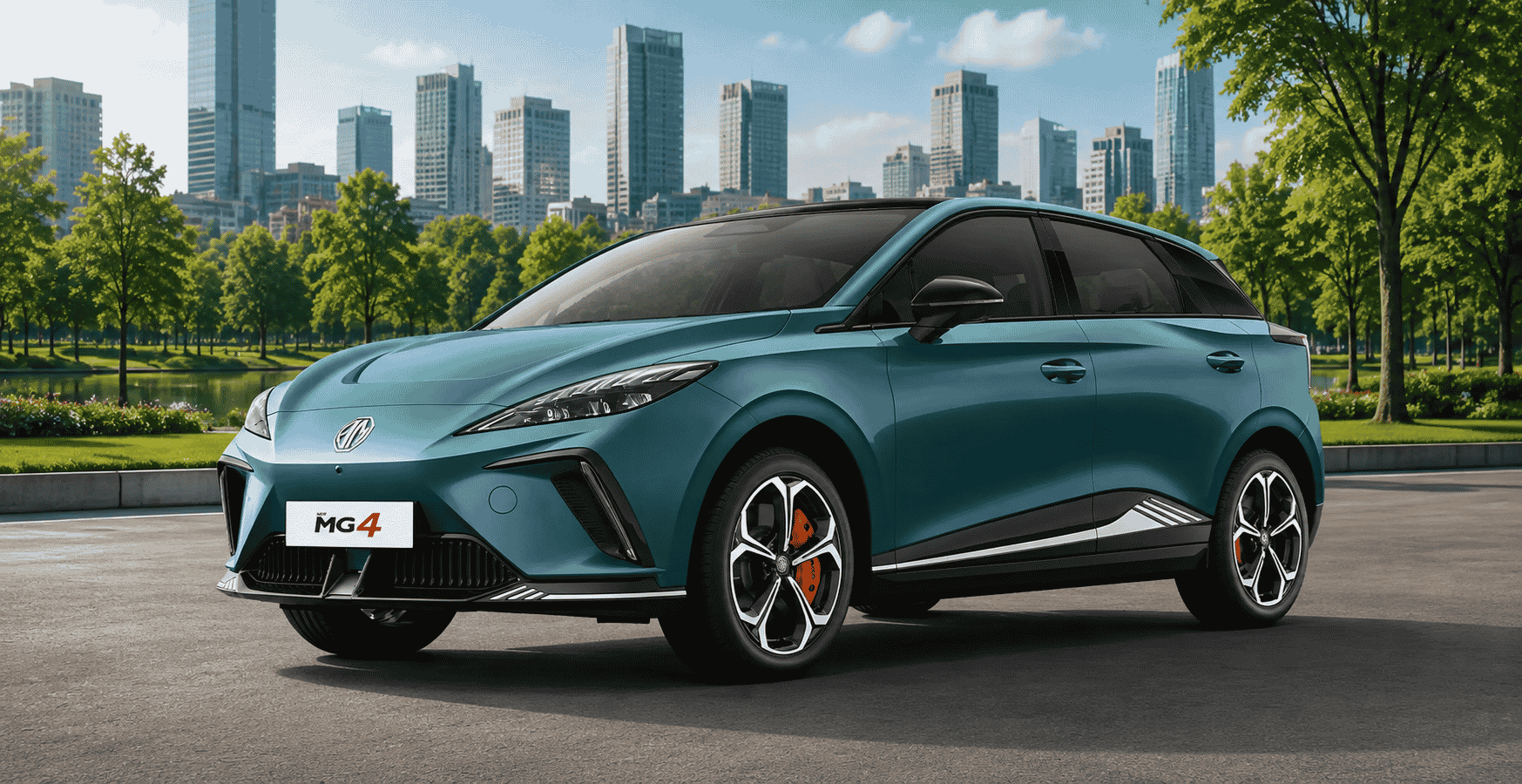
MG4 ELECTRIC (XPOWER) | 64 kWh |
MG ES | 51 kWh |
2. Charging Behavior and Energy Requirements
You rarely charge from 0% to 100%. Most EV owners top up when their State of Charge (SoC) is within a comfortable range. Battery manufacturers recommend keeping your SoC between 20% and 80% for optimal battery longevity.
Your actual charging cost is based on the energy transferred — not the total battery capacity. Use this formula to calculate the energy needed:
Energy Required (kWh) = (Target SoC% − Starting SoC%) × Total Battery Capacity (kWh)
Example: Charging an MG4 ELECTRIC (64 kWh) from 20% to 80% requires 60% × 64 kWh = 38.4 kWh of energy.
3. Electricity Rate (Baht per kWh)
Thailand's electricity pricing follows two main structures. Choosing the right tariff can significantly reduce your charging costs:
Progressive Rate (Standard Tariff)
This is the default tariff for most households. The rate increases as consumption rises:
- Units 1–150: approximately 4.25 Baht/kWh
- Units 151–400: approximately 4.85 Baht/kWh
- Units 401+: approximately 5.05 Baht/kWh
Time of Use (TOU) Rate
TOU pricing varies based on time of day and day of week, rewarding off-peak consumption:
- On-Peak (Mon–Fri, 9:00 AM – 10:00 PM): approximately 6.62 Baht/kWh
- Off-Peak (Mon–Fri, 10:00 PM – 9:00 AM + all day weekends and public holidays): approximately 3.24 Baht/kWh
Smart Tip: By scheduling your EV charging overnight during off-peak hours, you can save up to 35% per session compared to standard progressive rates.
The Charging Cost Formula
Once you know the energy required and your applicable rate, calculating cost is straightforward:
Charging Cost (Baht) = Energy Charged (kWh) × Electricity Rate (Baht/kWh)
Cost Comparison: Charging MG EV Models at 60% Battery
The table below illustrates the cost difference between the standard progressive tariff and the TOU off-peak rate for a 60% charge cycle across three MG models:
Model | Battery (kWh) | Energy @ 60% (kWh) | Standard Rate (Baht) | TOU Off-Peak (Baht) | Savings |
MG4 ELECTRIC | 64 | 38.4 | ~193.92 | ~124.42 | ~69.50 (35.8%) |
MG ZS EV | 50.3 | 30.18 | ~152.41 | ~97.78 | ~54.63 (35.8%) |
MG ES | 51 | 30.6 | ~154.53 | ~99.14 | ~55.39 (35.8%) |
* Rates are approximate and based on MEA/PEA standard tariffs. Actual costs may vary.
Initial Investment: What You Need for Home Charging
EV Home Charger Installation
Installing a dedicated EV charger (EVSE) at home typically costs between 35,000 and 75,000 Baht, which includes:
- Wall-mounted AC charger unit
- Professional electrical installation
- Dedicated circuit wiring and circuit breaker upgrades
- Safety equipment and certification
MG frequently offers promotional packages that include charger installation with the vehicle purchase, significantly reducing out-of-pocket setup costs.
TOU Meter Upgrade
To take advantage of time-of-use pricing, your home electrical meter must be upgraded to a smart TOU meter:
- One-time cost: approximately 3,000–5,000 Baht
- Minimum electrical capacity requirement: 30-amp service
- All home appliances benefit from the lower off-peak rate, not just your EV
Monthly Cost Comparison: EV vs. Gasoline
Based on a typical monthly driving distance of 1,500 km:
| EV (MG ZS EV) | Gasoline Vehicle | Monthly Savings |
Distance | 1,500 km | 1,500 km | — |
Energy/Fuel | ~231 kWh | ~100 liters | — |
Rate | 3.24 Baht/kWh (TOU Off-Peak) | ~39 Baht/liter | — |
Monthly Cost | ~748 Baht | ~3,900 Baht | ~3,152 Baht |
Annual Cost | ~8,976 Baht | ~46,800 Baht | ~37,824 Baht |
* Gasoline vehicle assumes 15 km/liter fuel efficiency at 39 Baht/liter.
Smart Charging with MG iSMART
MG electric vehicles come equipped with the MG iSMART mobile application, which includes a Scheduled Charging feature. This allows owners to:
- Set automatic charging start and end times
- Program the vehicle to charge exclusively during off-peak hours
- Monitor charging progress and energy consumption in real time
- Receive notifications when charging is complete
With Scheduled Charging, maximizing TOU savings requires no manual intervention — simply plug in your vehicle and let the app manage the rest.
Frequently Asked Questions
Q: Can I charge my EV using a regular household outlet?
A: Regular household outlets (emergency chargers) can be used as a temporary solution, but they are not recommended for daily charging. They deliver a very slow charge rate, and prolonged use poses safety risks, including overheating, especially if your home wiring is older or undersized. A dedicated EVSE installation is strongly recommended for regular use.
Q: How much will my monthly electricity bill increase?
A: It depends on your daily driving distance. For typical usage of around 1,500 km per month, expect your electricity costs to increase by approximately 700–972 Baht (using TOU off-peak rates). This is significantly less than the fuel cost for an equivalent gasoline vehicle.
Q: Will switching to a TOU meter affect other appliances?
A: Yes — and in most cases, positively. All home appliances will benefit from lower off-peak rates if used during off-peak hours (10 PM–9 AM weekdays and weekends). Running dishwashers, washing machines, and other high-draw appliances overnight will compound the savings on your overall electricity bill.
Q: What about DC Fast Charging at public stations?
A: Public DC fast chargers are priced higher than home charging, typically at 7.5–9.5 Baht per kWh. They are best suited for long-distance travel when rapid charging is necessary, rather than for daily commuting use.